Discover what matters to future leaders

1. What advice would you give to children aged 12 on how to become an effective leader?
Regardless of your age, if you trust in your capacity to make a difference, you are already on the path to successful leadership. The answer lies in believing in yourself and your ability to effect meaningful change.
2. Can emotional intelligence be learned?
Emotional Intelligence, or EQ, is essential and can be honed and improved, if you take the time. It starts with listening, sensing how people feel, and creating emotional alignment. Too many leaders overlook this, but without it, even the best strategy fails. Emotional intelligence fuels motivation and trust, builds engagement, and drives performance. I’ve learned over time that the secret to sustainable growth is putting people first—and that begins with empathy and self-awareness. Emotional intelligence can absolutely be learned. It’s the foundation of what I call Leadership with Soul.
3. What are the differences between leading different organisations?
Every organisation brings its own complexities. A global business requires alignment across cultures; a start-up demands agility and speed; public and non-profit bodies must balance diverse stakeholders. But whether it’s a restaurant, testing lab or theme park, the core of leadership is unchanged: put people at the centre. Build emotional connection, empower teams, and align them to a common purpose. Leading with soul transcends size, structure or sector. No matter the organisation, people determine performance—and how you lead them defines your success.
4. Who have you been inspired by?
My inspirations are many – everyone I work with, every single day. I am a big fan of the Greek philosopher Socrates and my mantra has always been: “The only thing I know is that I do not know everything.” My natural curiosity fuels my openness, and I get a lot of energy by learning from the people I meet and work with.
5. How do you ensure your workforce is truly engaged and feel what they do is meaningful?
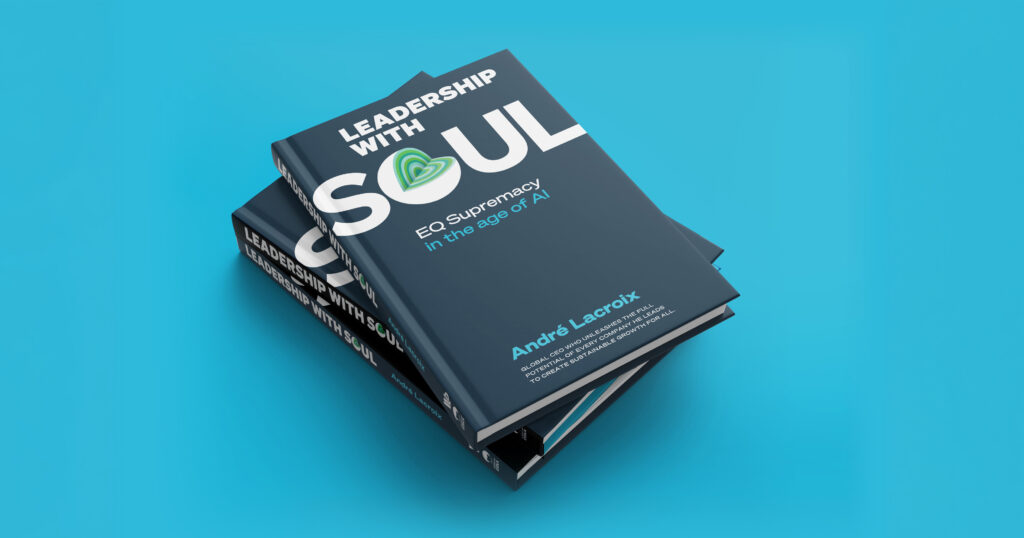
When it comes to engaging your workforce, it’s all about putting people at the centre of your growth strategy and day to day actions by leading with emotional intelligence. This is the central theme of my book Leadership with Soul, which argues that a humanist approach to leadership is the only way to create sustainable growth and value for all shareholders.
6. How can a company make sustainability part of its DNA?
It has to start with good leadership. Good leadership is essential to unleash the potential of any company and deliver sustainable growth and value for all stakeholders. The leadership team needs to be convinced that they can be a force for good and should have five key points in mind when building their sustainability strategy:
– The tone at the top needs to be purpose-led, authentic and passionate.
– Sustainability has to be at the heart of the company’s purpose, values and strategy.
– The right measurement on all sustainability indicators must be put in place.
– Inverting the pyramid to empower your people to lead from the front is mission critical.
– When reporting externally, be transparent and genuine.
7. How do you make sustainability meaningful for employees at Intertek?
At Intertek, our purpose is to bring quality, safety, and sustainability to life. We are laser focused on delivering sustainable growth and value for all stakeholders: our customers, our people, our suppliers, our shareholders, and our communities. Every business unit manages its own performance based on financial and non-financial indicators. And we lead by example in terms of disclosure as we were the first public company to publish a 3-in-1 Annual report – Strategy report, Sustainability report, and Financial report.
8. What does it take to be an inspirational leader in today’s hyper-competitive and ever-evolving world of business?
My advice is to remember that every successful business strategy has people at its heart, and that the most effective leaders are those that lead with emotional intelligence, empowering their organisations to achieve transformative change. By embracing change and constantly reinventing our approach to leadership we can achieve incredible results which generate shared benefits for all.
9. What kind of personality do you need to run a complex business?
You need humility, passion, and an unwavering focus on people. A strong personality isn’t about being forceful—it’s about showing integrity, listening well, and empowering others. You must lead with the values of Respect, Courage, Passion, Integrity and Responsibility. Complexity demands that you stay grounded, admit when you don’t know, and surround yourself with people who challenge and support you. It’s not about ego—it’s about energy, emotional intelligence, and care. The right personality doesn’t dominate—it elevates the team to succeed together.
10. How do you successfully navigate a range of workplace dynamics and earn the respect of your team?
Respect must be earned through action. You earn it by listening, showing up, following through and genuinely caring. I always spent time on the ground—speaking with employees, understanding their challenges, and valuing their insights. Emotional intelligence matters. You must understand the energy and mood of the organisation and respond with empathy. Keep your word, admit mistakes, and ask for help. Show respect first, and it comes back tenfold. That’s how trust is built—and trust is the foundation of real leadership.
11. What challenges have you faced over the course of your career and how did those experiences shape who you are today?
I’ve led a number of global brands through periods of change and crisis —including Euro Disney after 9/11, Burger King during BSE, Inchcape following the 2008 crash, and Intertek through the COVID pandemic. Each experience affirmed a single truth: people make the difference. I learned that sustainable growth only comes when you energise, engage and empower your team. These experiences shaped my belief in Leadership with Soul.
12. Your book talks about your life experiences. Can you provide more detail on any of these that shaped who you are?
A careers evening at school changed my life. I entered wanting to be a surgeon; I left knowing I wanted to lead people. That moment defined my purpose: to achieve great things by taking others with me. My early years, shaped by my parents’ values and experiences spent abroad, taught me curiosity, discipline, and empathy. Living and working across 120 countries gave me a global mindset and a deep appreciation of different cultures. These experiences formed my humanist outlook, which remains central to how I lead today.
13. Have you had any examples of when you were wrong and how did you overcome it?
Leadership isn’t about being right; it’s about doing what’s right. When I’ve been wrong, I’ve apologised, corrected course, and moved forward. People respect honesty and humility more than perfection. You build trust by being accountable and transparent. Mistakes are powerful teachers—if you’re open to learning. I’ve always believed in the power of feedback and reflection. They’re essential tools for becoming a better leader. As I say in the book: never stop training, never stop improving.
14. What are your thoughts on celebrity CEOs with outsized personalities? Do you think it makes it easier or more difficult for them to drive change in their organisations?
True leadership is not about the individual—it’s about the team. Big personalities may inspire in the short term, but sustainable success comes from humility, trust and teamwork. A CEO’s role is not to be a star, but to energise others and create lasting impact. I’ve always believed in leading with soul, not ego. Leadership is a privilege. When it becomes self-serving, organisations suffer. Driving change requires emotional connection—not celebrity.
15. Do you mind speaking about leading with emotional intelligence and gut feelings, before reviewing data and facts?
Leading with EQ means listening first—not just to numbers but to people. Data matters, but emotional cues, tone of voice, and energy often reveal more. EQ is about sensing the pulse of the organisation and responding in the moment, often before the facts are fully available. During the pandemic, I relied on EQ to lead remotely, sending weekly videos to sustain engagement. Emotional intelligence isn’t an afterthought—it’s at the very foundation of leadership.
16. What do you think is a common mistake that companies make in relation to knowing their core brand?
Too often, companies forget that their brand is a lived experience, not just a logo or tagline. The biggest mistake is failing to ensure that everyone across the business lives the brand daily. Inconsistency—whether across markets or customer touchpoints—can erode trust. Another trap is letting over-ambitious managers or third-party endorsers distort the brand essence. The brand must be authentic, coherent, and protected from dilution. Everyone, everywhere must understand and embody its meaning.
17. As a leader, how do you think about focusing on improving on your strengths and working on your weaknesses?
The key is knowing yourself and continuing to evolve. I’ve always used 360° feedback and worked with excellent coaches to help identify both strengths and areas for development. Together, we created personal growth plans with specific goals. A good coach won’t give you answers—they’ll ask the right questions so you can reflect and find your own solutions. Strengthening what you already do well while tackling gaps in your style is the surest path to becoming a better leader.
18. How do you try to get good feedback at the top of an organisation?
You must actively create feedback loops. I use a mixture of tools—360° reviews, coaching, and what I call “antennae”: people in the organisation who can sense how things really are. I also travel constantly, spend time with colleagues at all levels, and prioritise informal chats. Leaders must avoid the echo chamber—stay close, ask questions, and really listen. Without this ongoing connection, you risk losing touch with the heartbeat of your business.
19. In your book, you talk about the importance of celebrating successes every day. What are some of the examples of you practicing this?
Recognition is essential—it keeps energy high and people engaged. I’ve always created platforms to spotlight success, from weekly video messages to public award events. At Burger King, we brought top-performing managers to the Bavarian Alps each year—climbing together, sharing ideas. These moments weren’t just motivational—they sparked many of our best innovations. I believe recognition should be daily, sincere, and personal. It builds belief, boosts morale, and fuels outperformance.
20. Was it difficult to narrow down your leadership approach to 10 principles?
Yes, but it was also deeply rewarding. These principles are not theoretical—they’re drawn from decades of leadership across industries and geographies. Each principle reflects what truly works in practice. Boiling it down required clarity, iteration, and reflection. The result is a blueprint for what I call Leadership with Soul: a practical, people-first approach designed to create sustainable success. It’s not about perfection—it’s about purpose, values, and continuous growth for yourself and your organisation.